
- Sofa Styling
How to Style a Throw Blanket on a Sofa: 4 Easy Ways
NativaFiber | July 20, 2026 | 5 min read
A throw blanket can make a sofa feel more inviting, add color and texture to the room, and keep an extra layer of warmth within easy reach. How you place it affects both the appearance of the sofa and how practical the blanket is for everyday use.
There is no single correct way to arrange a throw. A neatly folded blanket creates a clean, structured appearance, while a loosely draped throw produces a more relaxed and lived-in look. The right approach depends on the type of sofa, the size of the blanket and how often you plan to use it.
Below are four practical ways to style a throw blanket on a sofa, along with advice for sectionals, loveseats, leather couches and sofas with a chaise.
Four Ways to Place a Throw on a Sofa
1. Folded Over the Armrest
Fold the throw lengthwise into a narrow rectangle and place it over one arm of the sofa. Let both ends hang at approximately the same length, or position the blanket slightly off-center for a less formal arrangement.
This method creates an organized appearance and keeps the throw easy to reach without covering much of the upholstery. It works particularly well in smaller living rooms, where a large draped blanket could make the sofa look crowded.
A folded armrest arrangement is a good choice for:
- solid wool throw blankets;
- structured herringbone patterns;
- compact sofas and loveseats;
- interiors with a clean or minimal design.
For a more relaxed result, avoid folding every edge too precisely. A slight variation in the folds prevents the arrangement from looking overly staged.
2. Draped Over the Back
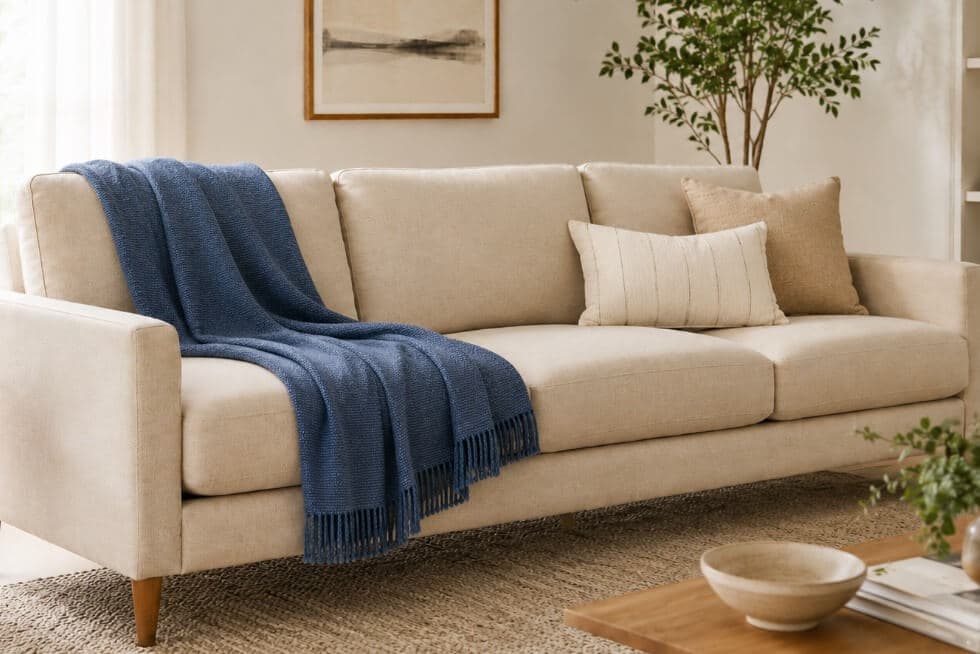
Place the throw over one side of the sofa back and allow part of it to fall naturally toward the seat. The blanket can cover only the upper corner or extend farther down the back and seat, depending on its size.
This placement adds vertical interest and helps break up a wide area of solid upholstery. It is particularly useful on neutral sofas in beige, gray, cream or brown, where a contrasting color or visible weave can make the seating area feel less uniform.
Avoid positioning the blanket exactly in the center unless you are creating a deliberately symmetrical room. Draping it over one side usually looks more natural and allows the sofa cushions to remain visible.
For a sofa placed away from the wall, check the back before finishing the arrangement. The blanket should look intentional from both sides rather than hanging unevenly behind the sofa.
3. Draped Across the Corner
For a relaxed appearance, place the throw across one back corner and allow it to extend onto the seat. Gather the fabric lightly instead of spreading it completely flat.
Add one or two pillows near the blanket to create a layered arrangement. The pillows can repeat one of the throw’s colors, introduce a related neutral or provide contrast through a different texture.
This placement works especially well on:
- deep sofas;
- casual family-room couches;
- sectional sofas;
- sofas with large seat cushions;
- interiors where the throw is used regularly.
The blanket should not cover the entire corner of the sofa. Leaving some upholstery visible keeps the arrangement balanced and prevents the seating area from looking overloaded.
4. Folded Across the Seat or Chaise
Fold the throw into a wide rectangle and place it across one seat cushion or along the chaise of a sectional sofa. This is one of the most practical arrangements for households where the blanket is used frequently.
The fold does not need to be narrow. A wider fold makes the blanket easier to open while still keeping it organized when it is not in use.
On a chaise, position the throw approximately halfway between the back cushion and the front edge. Placing it too close to the front can make it slide onto the floor, while placing it directly against the back cushions may make the sofa look crowded.
This arrangement is also useful when you want to protect one section of the sofa from regular contact without covering the entire piece of furniture.




How to Choose the Best Throw Placement
The best placement depends on the result you want to achieve.
For a clean and structured appearance, fold the throw over the armrest or across the seat. These arrangements create clear lines and are suitable for modern, Scandinavian and minimalist interiors.
For a relaxed appearance, drape the blanket across a back corner and combine it with one or two pillows. This creates more visible layers and works well in casual living rooms.
To break up a large sofa, place the throw over one side of the back. The vertical line created by the blanket divides the wide horizontal surface of the upholstery.
For easy everyday use, keep the throw on the seat, chaise or armrest. Highly decorative arrangements may look attractive, but they are less practical if the blanket must be rearranged every time someone uses it.
Styling Throws on Different Types of Sofas
Standard Two- or Three-Seat Sofa
A standard sofa gives you the most placement options. Use the armrest for a structured look, the back corner for a casual arrangement or one side of the back to add height.
Avoid placing a large throw across the full width of a small sofa. Covering too much upholstery can make the furniture appear smaller and visually heavier.
Sectional Sofa
A sectional provides more surface area, so a throw can help define one part of it. Place the blanket across the chaise, over an outside corner or near the point where the two sections meet.
Do not position the throw in the middle of the main seating area, where it may interfere with regular use. The chaise or end section is usually the most practical location.
A larger wool throw can work well on a sectional, but it should still leave a substantial part of the upholstery visible.
Sofa with a Chaise
Fold the throw across the chaise or drape it diagonally from the back cushion toward the outer edge. A diagonal arrangement creates a relaxed look, while a rectangular fold appears more orderly.
If the chaise is used for reclining, choose a placement that allows the blanket to be opened without first removing several pillows.
Loveseat
A compact loveseat usually looks best with a smaller throw or a standard throw folded into a narrow shape. Place it over one arm or one back corner.
Avoid adding too many decorative pillows next to the blanket. On a small sofa, one throw and one or two pillows are usually enough to create a complete arrangement.
Leather Sofa
Throws can slide more easily on smooth leather upholstery. Folding the blanket over an armrest may be more stable than draping it loosely across the back.
Another option is to place part of the throw beneath a pillow. The pillow adds light pressure and helps keep the blanket in position without requiring clips or fasteners.
Textured wool, herringbone and plaid throws can also soften the visual appearance of leather by introducing a contrasting woven surface.
Choosing the Right Throw Blanket Size
The size of the throw determines how it can be arranged.
A small throw is suitable for an armchair, loveseat or sofa armrest. It adds color and texture without covering a large portion of the furniture.
A standard throw measuring approximately 55 × 79 inches, or 140 × 200 cm, works with most two- and three-seat sofas. It is large enough to drape across a corner, fold over an armrest or use as an everyday blanket.
Larger blankets are more suitable for sectionals, wide sofas and deep chaise sections. They create a fuller drape but may need to be folded several times when used as a decorative accent.
The listed size should also clarify whether fringes are included in the total measurements, since this affects the amount of usable woven fabric.
How to Coordinate a Throw with Pillows
A throw blanket does not need to match the pillows exactly. A coordinated arrangement often looks more natural than a set in which every item uses the same color and pattern.
For a balanced combination, repeat one color from the throw in one of the pillows. The repeated shade creates a connection without making the arrangement overly uniform.
When using a solid throw, patterned pillows can add variation. Plaid, striped, floral or geometric cushions can work as long as they share at least one related color.
When using a plaid, herringbone or patterned throw, choose mostly solid pillows. This allows the blanket’s design to remain visible and prevents several patterns from competing for attention.
You can also combine different textures within the same color family. For example, a woven wool throw can be paired with linen, cotton or velvet pillows in related neutral shades.
Common Throw Styling Mistakes
Covering Too Much of the Sofa
A throw should complement the sofa rather than hide it. Unless the blanket is being used as a protective cover, leave most of the upholstery visible.
Making the Arrangement Too Symmetrical
Perfectly centered throws can look formal or staged. Slight asymmetry usually produces a more natural arrangement, particularly in a living room used every day.
Using Too Many Folds
A heavily folded blanket may appear bulky and can be inconvenient to open. Use only enough folds to control its width and length.
Combining Too Many Patterns
A patterned throw, patterned sofa and several patterned pillows can make the seating area visually busy. Choose one dominant pattern and keep the remaining elements simpler.
Letting the Throw Touch the Floor
Unless the blanket is intentionally oversized, keep the lower edge above the floor. This protects the fabric from dust and prevents it from being stepped on.
Ignoring Everyday Use
The arrangement should match how the room is used. A decorative corner drape may suit a formal sitting room, while a folded throw across the chaise is more practical for a family room.
Choosing a Throw for Your Sofa
The placement of a throw is only one part of the arrangement. Color, pattern, material and size also affect how the blanket looks on the sofa.
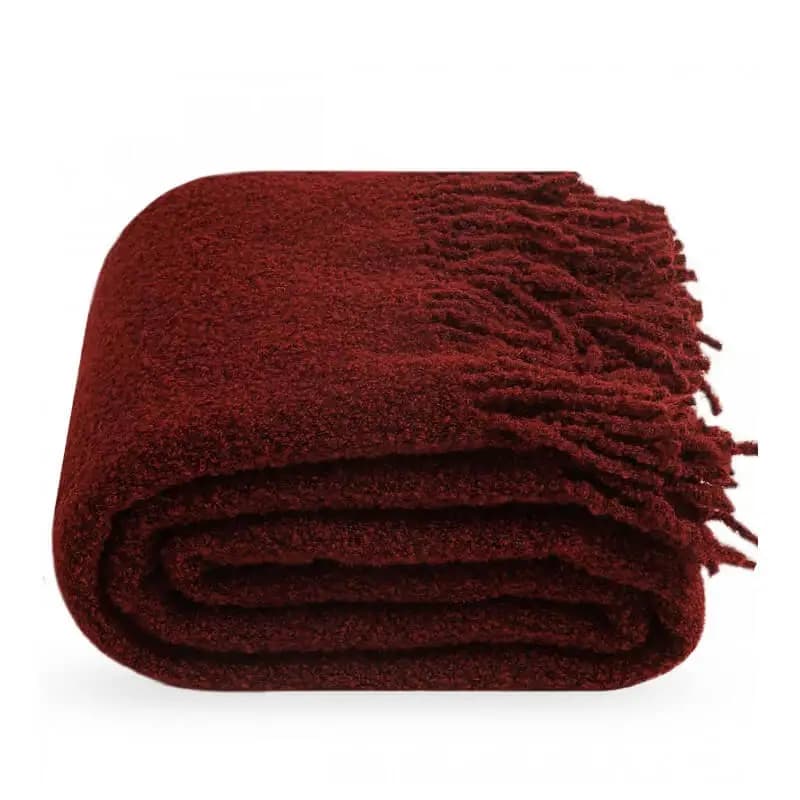
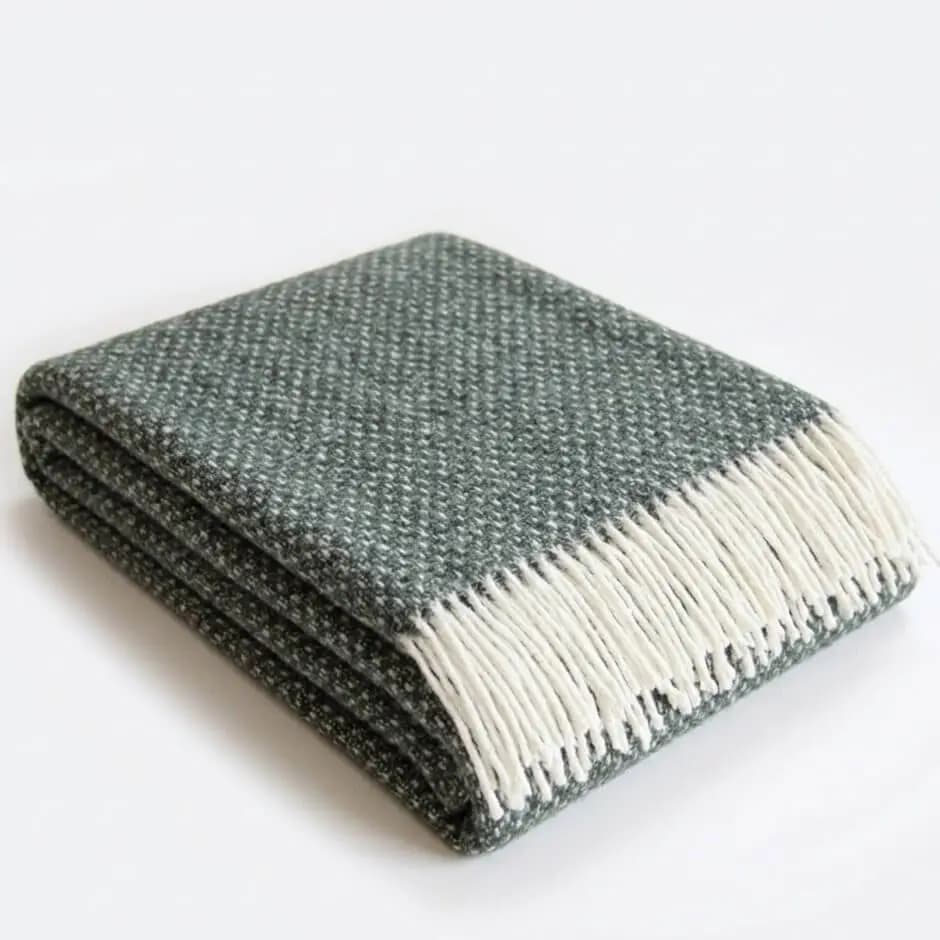
Solid wool throws provide a clean block of color and are easy to coordinate with patterned pillows. Herringbone throws add a subtle geometric detail, while plaid throws create a more noticeable decorative feature.
For a neutral sofa, a throw can introduce contrast through dark green, blue, red, yellow or another stronger color. A beige, gray or cream throw can create a quieter tonal arrangement when paired with upholstery in a related neutral shade.
Final Styling Tip
Start with the way you actually use the blanket. Place it where it can be reached comfortably, then adjust the folds, pillows and surrounding accessories.
A practical arrangement usually looks more natural than one created only for decoration. Whether the throw is folded over the armrest or draped across a corner, leave some upholstery visible and allow the fabric to maintain its natural shape.
Explore NativaFiber throw blankets for sofas in solid, plaid and herringbone designs, with sizes suitable for armchairs, standard couches, sectionals and beds.


